Do you qualify for a stairlift grant? This funding option is worth exploring if you need to buy a stairlift but are struggling with the cost.
If you or a loved one is struggling with stairs, a stairlift can make everyday life safer and more comfortable. However, the cost can feel like a barrier. The good news is that financial help may be available through stairlift grants in the UK, depending on your circumstances. This guide explains what stairlift grants are available, who may be eligible, and how to apply, as well as alternative options if you don’t qualify for a grant. We aim to help you understand your choices and find the best solution for your home and budget.
Living with a mobility impairment or disability can be incredibly challenging as it is, particularly when it comes to navigating your own home. Climbing stairs can be difficult, if not impossible, for some individuals, which can lead to a loss of independence and a decreased quality of life. However, the cost of installing a stairlift can be expensive for many, especially for those on a limited income. This is where stairlift grants come in.
There are many grants available, especially grants for stairlifts. Depending on your unique circumstances, the amount of financial assistance available to you will vary. At their core, stairlift grants are about giving people the support they need to live with dignity and autonomy, and we believe that this is something worth celebrating and supporting.
Types of Grants Available (Disabled Facilities Grant - DFG)
The Disabled Facilities Grant (DFG) is the main government grant available for stairlifts in the UK.
A DFG is intended to help make essential adaptations to a property so that a person with a disability can live more independently and safely at home. Stairlifts are commonly covered when stairs present a daily mobility challenge.
What the DFG can help with
- Funding towards the supply and installation of a stairlift
- Adaptations that improve safe movement between floors
- Long-term home accessibility improvements
Funding amounts and approval are based on individual assessments. In many cases, the grant contributes significantly to the overall cost, but it may not always cover all expenses.
Location-Specific Information
It’s important to know that Disabled Facilities Grants are administered by local councils, not by stairlift companies.
This means:
- Eligibility criteria can vary by location
- Waiting times differ between councils
- Application processes may vary slightly
We always recommend checking directly with your local authority to understand what support is available in your area. If you’re unsure where to start, we’re happy to guide you through the process and explain what to expect.
Where can I find stairlift grants?
Often, your assigned social care worker or specialist nurse is a good place to start. They can offer advice on the current stairlift grants available in your area. Usually, the first places to look at are:
- Your local council – You might qualify for a grant through your local council. This depends on your area, but some councils across the UK have unique disability grants to help with a range of mobility equipment.
- Your local registered charities – Local non-profit organisations often have grants to help individuals with disabilities, such as Margaret’s Fund, which focuses on grants for women with disabilities.
- Government – The UK Government offers a Disabled Facilities Grant to individuals who qualify, which can help you with not just stairlifts but also other mobility aids and home improvements.
Looking for available stairlift grants in your area? Turn2Us is a registered charity that offers a handy Grant Finder tool.
What is the Disabled Facilities Grant?
The Disabled Facilities Grant is a government-funded grant that helps individuals with a disability or long-term illnesses make essential adaptations to their homes.
You can use it to fund:
- Stairlifts
- Ramps
- Widening doors
- Accessibility features for bathroom and kitchen facilities
The DFG is designed to help individuals remain living independently in their own homes and to make it easier for them to carry out day-to-day tasks without assistance. The grant can also help to reduce the risk of falls or other accidents, which can be particularly important for older individuals or those with mobility issues.
To see if you or a family member qualifies, you’ll need to talk to your local council. Some councils will allow you to apply online – note, you will be asked to provide medical proof along with your application form, so it’s a good idea to start getting all this information together.
Can I get a stairlift with the NHS?
Although the NHS directly cannot give you a stairlift grant, they can aid in the process. They will work with local authorities through a home assessment, and an occupational therapist will assess your needs.
An occupational therapist can’t tell you what type of stairlift you need, it is a stairlift engineer that can access your home and advice you on what stairlift will best suit the needs of your home.
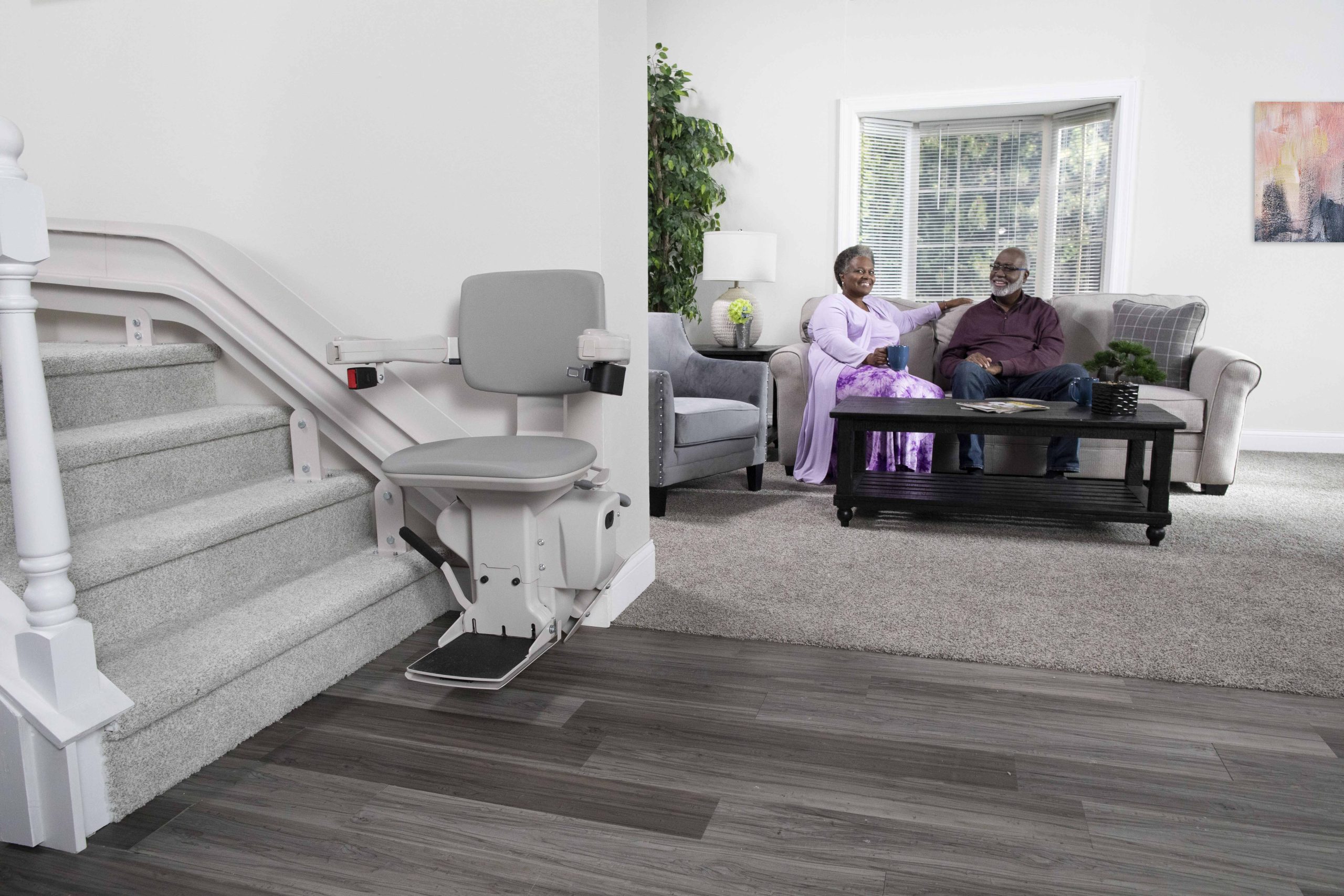
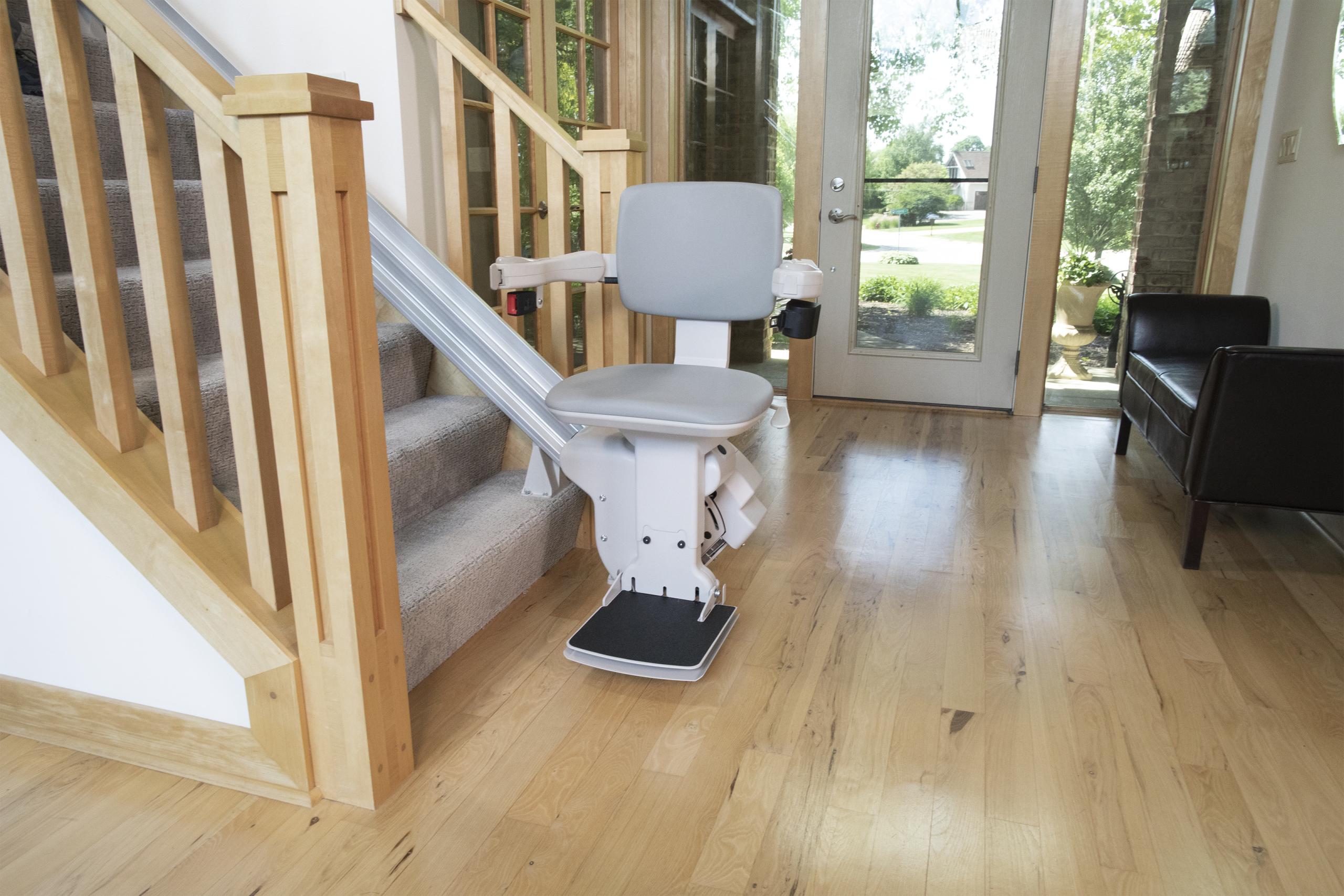
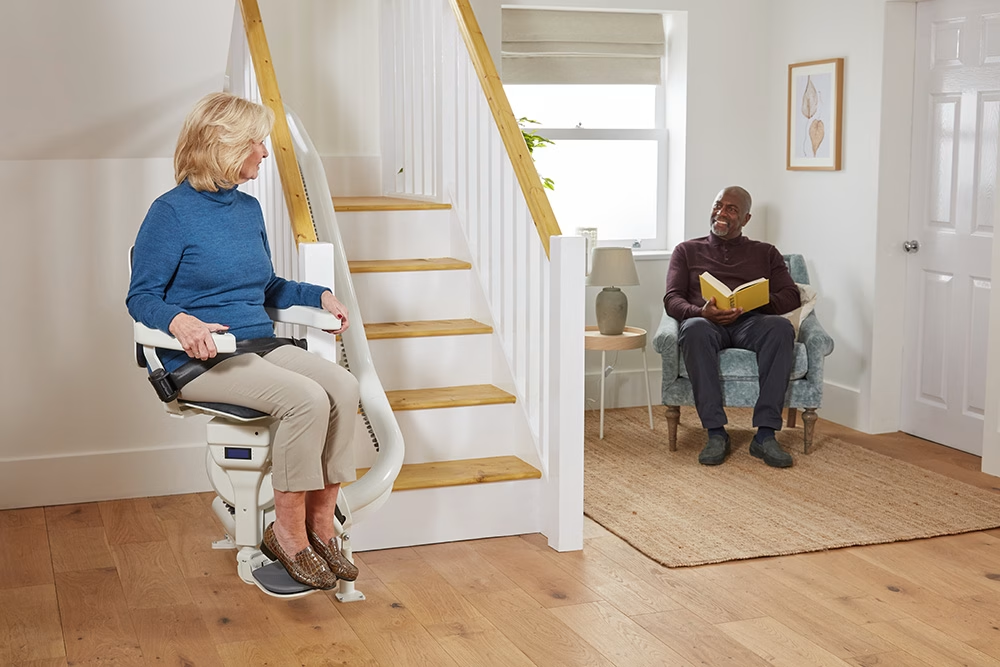
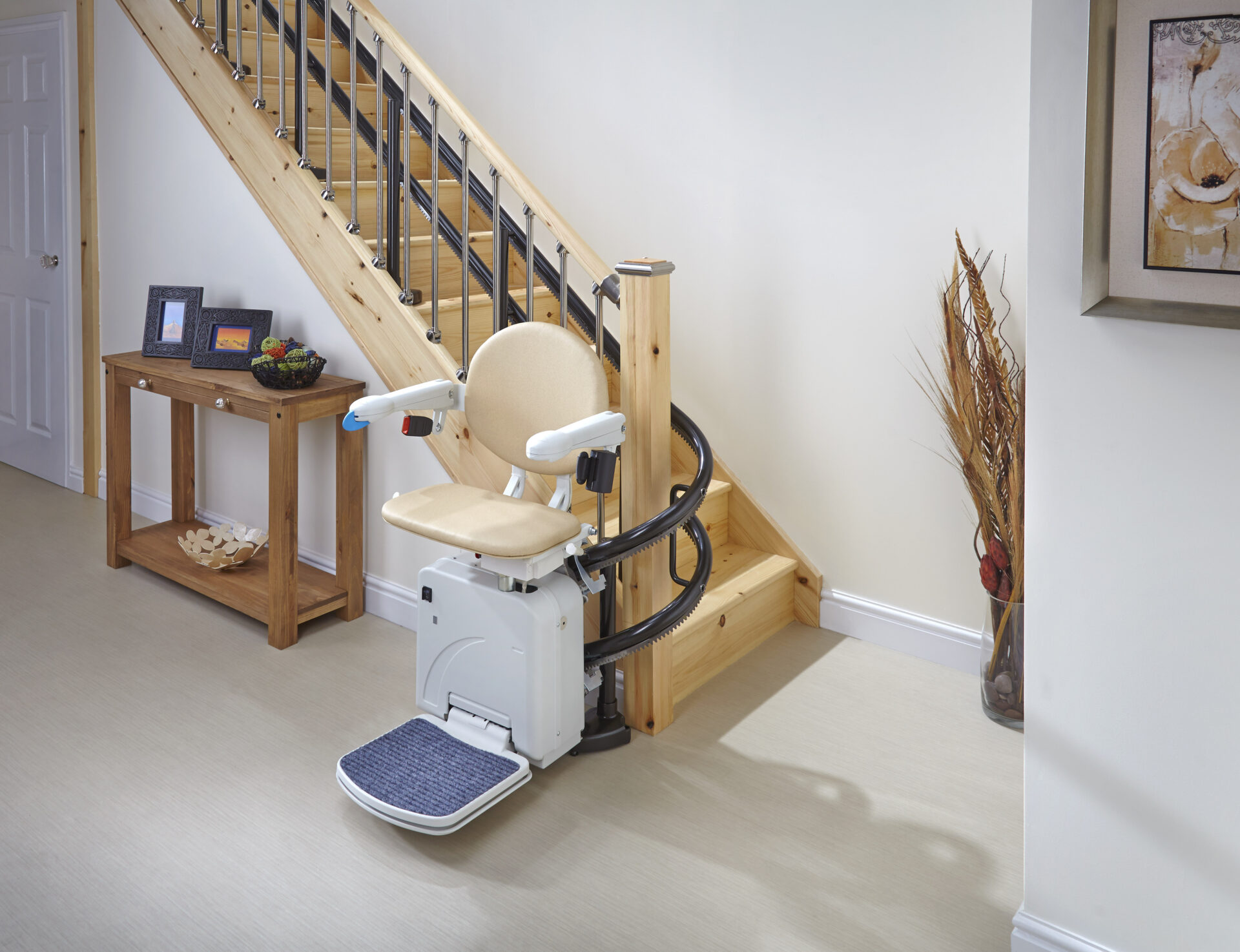
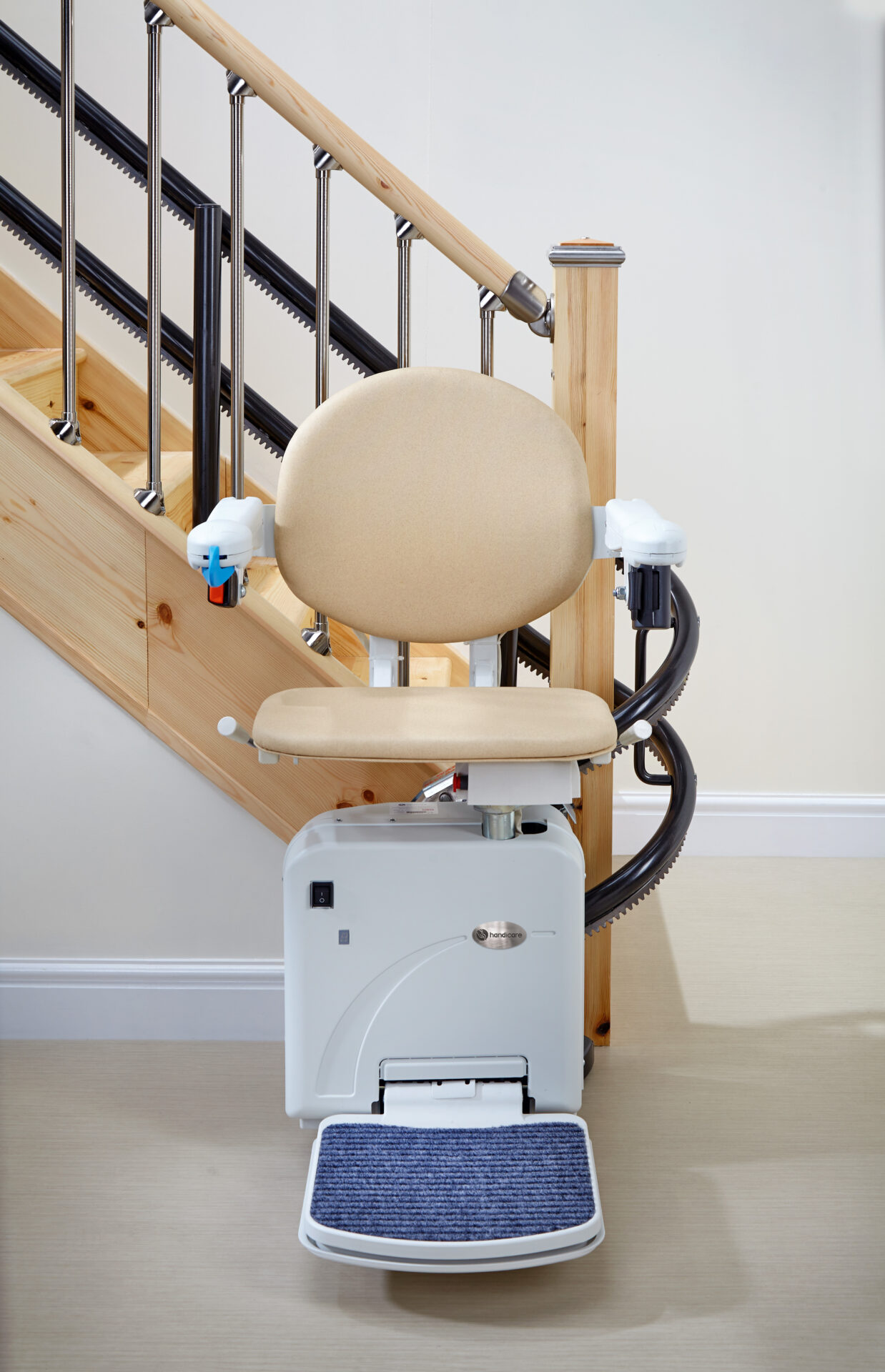
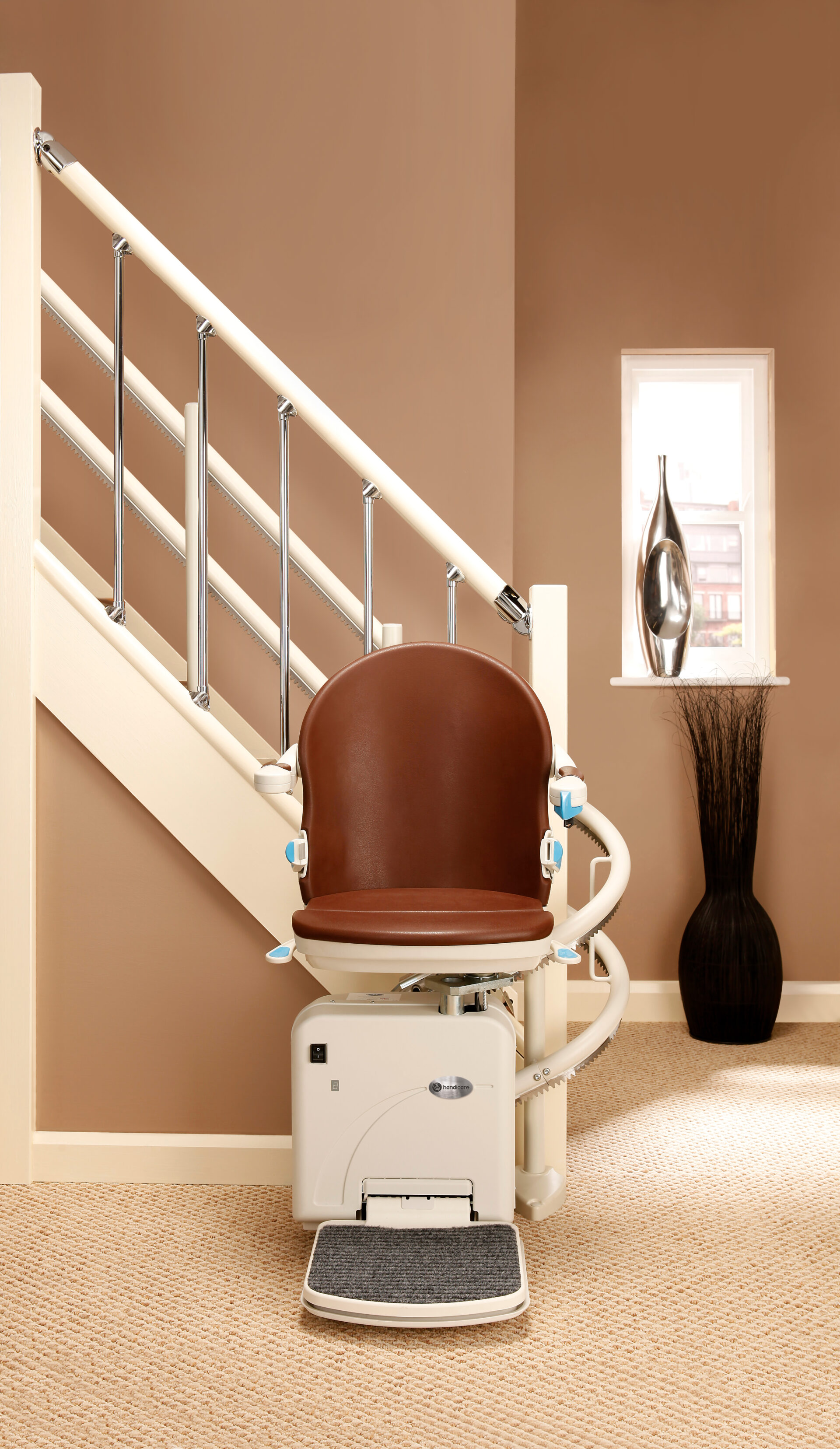
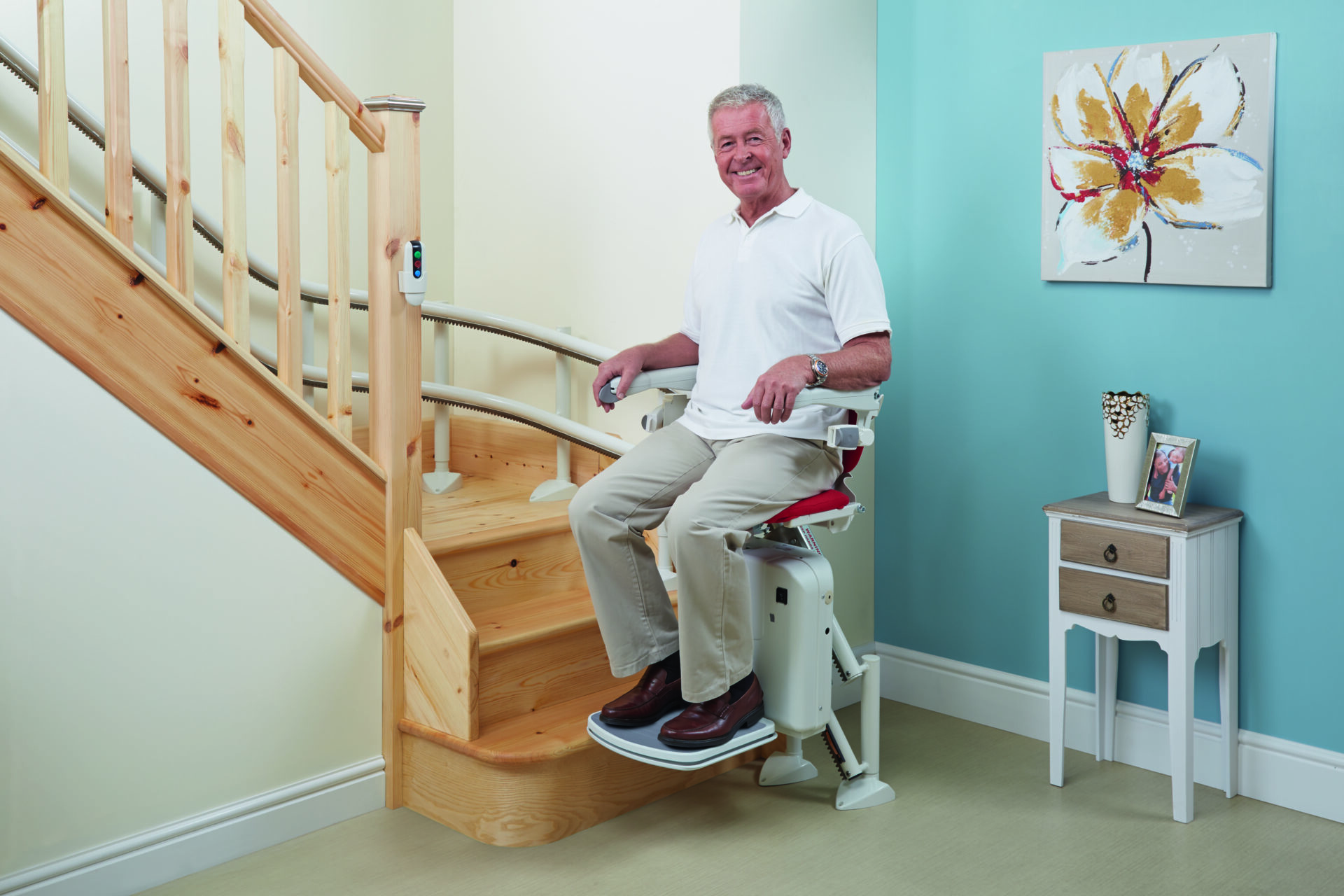
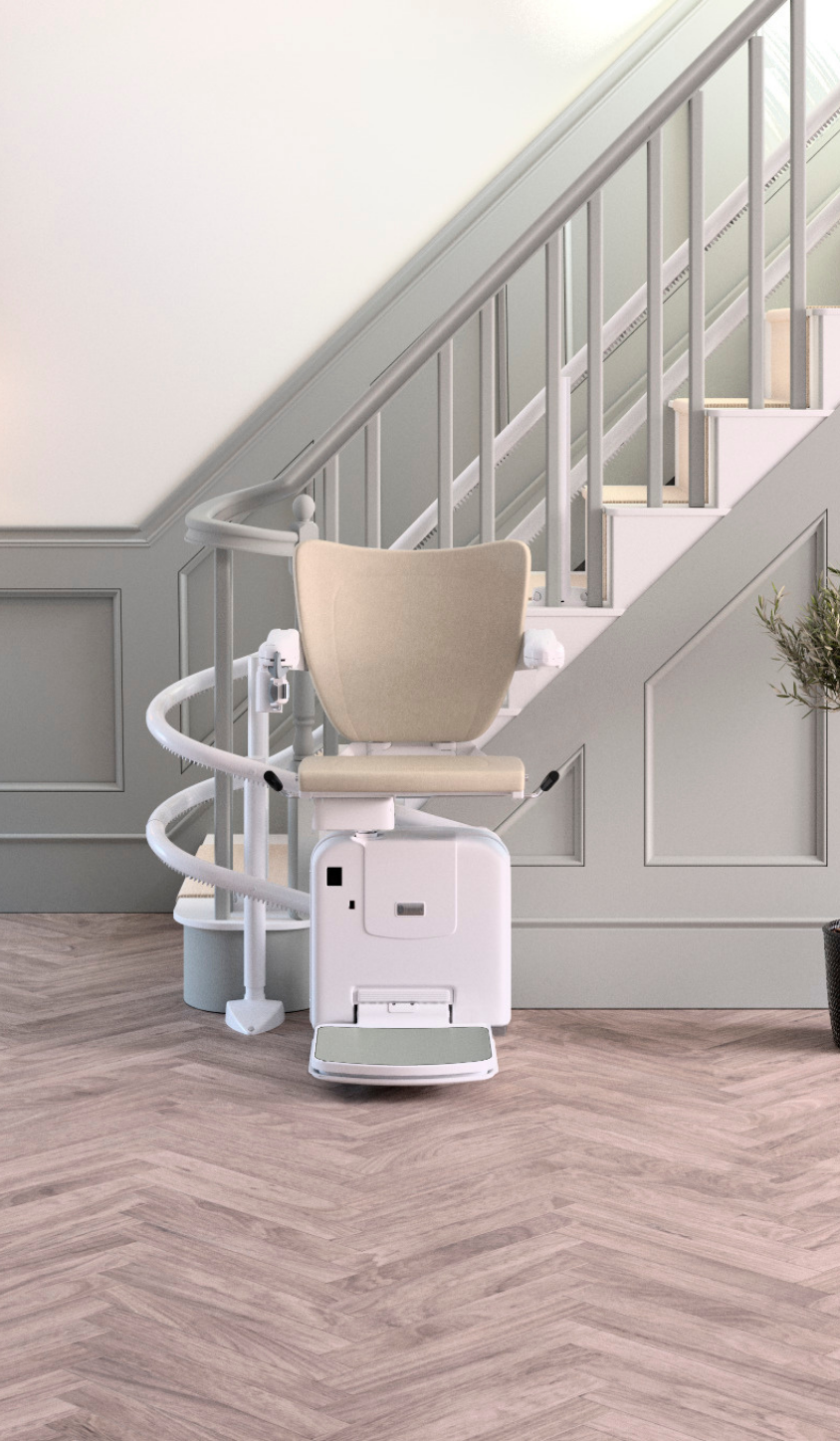
There are two types of stairlifts available, straight stairlifts and curved stairlifts. Straight stairlifts are best for stairs that don’t feature a landing or bend. Whilst curved stairlifts, as the name suggests, are best suited for curved staircases or staircases with a landing. A specialist will help you choose one is fits your home seamlessly.
What is covered by a stairlift grant?
Your grant coverage will depend on the provider and the unique necessities of your case. After a home assessment, it will be determined whether you need more than just a stairlift. For example, you might also be given funds for an accessible shower installation or other mobility aids, such as access ramps or walking aids.
If approved, your grant will generally cover any equipment and adaptations in your home that are required. This includes the cost of installation, as well as the purchase price and any necessary modifications to your home to accommodate the lift.
How do I qualify for a stairlift grant?
The eligibility criteria for stairlift grants can vary depending on the local council or charity that provides the funding. However, generally, applicants must be homeowners or tenants and have a medical condition or disability that makes using the stairs difficult or dangerous.
This may include physical disabilities, such as arthritis, Parkinson’s disease, multiple sclerosis, or mobility issues related to ageing or injury.
Grants take into consideration your household income, mobility issues, and your general financial situation. For example, the government-funded Disabled Facilities Grant is a means-tested fund, meaning that your income or assets will be taken into consideration when determining your eligibility.
Some grants are purely based on mobility issues and medical diagnosis and others will be based on the area in which you live.
Whose financial situation is considered?
Assistance provided for stairlift grants is based on the income of the entire household, which includes both the disabled person and their spouse or partner’s capital and income. Usually, it is given to individuals or families who have low incomes or are going through financial difficulty.
Request a copy of our brochure
In our brochure, you’ll find plenty of detailed information and background on our quality range of stairlifts, including our leading Handicare products.
Eligibility and Application Process for Stairlift Grants
Stairlift grants are designed to support people who need help moving safely around their home due to age, illness, or disability. Eligibility is based on personal circumstances and is assessed by your local council.
Who may be eligible?
You may qualify for financial assistance if:
- You or someone in your household has a long-term disability or mobility condition
- The stairlift is essential for safe access within the home
- You own your property or are a tenant with permission from the landlord
- You meet the council’s financial assessment criteria (means testing)
How the application process works
- Contact your local council to request an assessment
- An occupational therapist may visit to assess your mobility needs
- The council reviews eligibility and funding availability
- If approved, the funding is allocated towards the stairlift and installation
The process can take time, but it ensures the right solution is provided for your needs.
What other options do I have if I need a stairlift but can't get a grant?
Unfortunately, stairlift grants are not available everywhere in the UK, and the eligibility factors may also vary.
If, for whatever reason, you don’t qualify for a grant but are still struggling for money towards a much-needed stairlift, there are other options.
If you don’t qualify for a stairlift grant or if you need a quicker solution, there are several alternative options available.
These include:
- Flexible finance plans to spread the cost over manageable monthly payments
- Reconditioned stairlifts, offering a lower-cost option without compromising safety
- Charitable funding or benevolent support, depending on individual circumstances
- Private funding, which often allows for faster installation without council waiting times
We’ll always explain these options clearly so you can make an informed decision that suits your needs and budget.
Your stairlift options with Senior Stairlifts
At Senior Stairlifts, we offer rental stairlifts for when you need temporary access to one. This is often an affordable way to get the short-term aid that you require. One of the great benefits of rental stairlifts is that you can use them without any upfront expense. We are transparent about all our maintenance fees and plans, so speak to one of our engineers today for more information about rental stairlifts.
We also offer reconditioned stairlifts, which are equally high-quality and affordable options for those who require a stairlift but are struggling financially. Our experienced team of engineers specialise in bringing stairlifts back to life so you can rest assured of their reliability and condition.
Our reconditioned stairlifts are never older than 12 months and go through a rigorous process before they’re deemed safe. We know exactly where all our stairlifts come from, as they often come from our own customers who choose to donate their unit or simply no longer need it.
VAT Relief
The cost of purchasing and installing a stairlift can be a significant expense to many families. If you meet the requirements of HMRC’s definition of ‘chronically sick or disabled’, however, you may be eligible for VAT Relief.
To see if you qualify, you’ll need to fill out a User VAT Declaration form. Eligible customers won’t have to pay any VAT at the time of purchase, which will take a chunk off the total lift price.
In addition, if you’re over the age of 60, you might be eligible to reduced VAT on your stairlift and any other mobility aid.
Get a quote with Senior Stairlifts today
Getting a stairlift can seriously improve the quality of life of your family but, with so many options, it can be difficult to make a choice that is best for you. Our company values lie in helping people and providing them with low-cost no-nonsense solutions.
We are not a sales-focused company, we are just here to help you in a time of need. Instead of a sales team, we have a dedicated team of engineers with years of experience in stairlift fittings, they can offer friendly advice and go above and beyond with their customer service.
There are no hidden fees or sneaky prices. At Senior Stairlift, we are committed to honesty and transparency.
Get a quote on any of our stairlifts with one of our expert engineers today!
Stairlift Grant FAQ's
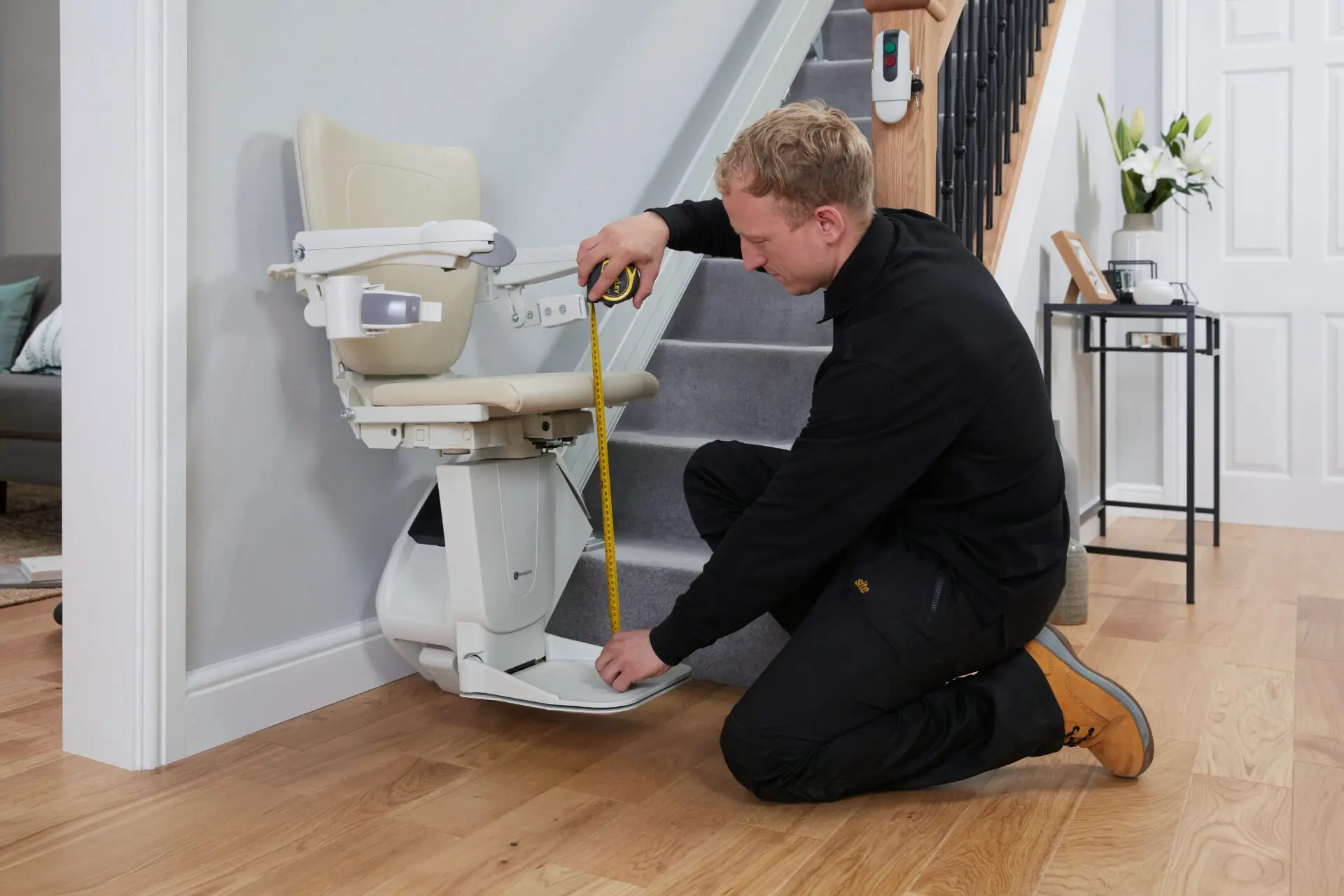
If you’re unsure about what stairlift to choose, it’s important to get advice from an occupational therapist or a stairlift expert. At Senior Stairlifts, we have a friendly team of stairlift experts and stairlift engineers who can visit your home and assess your staircase. They will be able to discuss your needs and the extra features the stairlifts have to offer, to help make mobility easier for you.
In England, you can receive up to £30,000 for house modifications like stairlifts. Northern Ireland is £25,000, and Wales is up to £36,000. Because grants are means-tested, your award may be smaller depending on your income and savings.
Not all the time. They will cover the entire cost of the fit if you qualify for a DFG; they’ll pay outright for the fit. With charitable grants, they’ll pay the supplier, and you may need to pay more than an administrative fee if the award only covers a portion of the cost.
If you are not able to qualify for a DFG, here at Senior Stairlifts, we offer stairlift finance. You can do a speedy, soft finance check with us to see if you get approved. If so, you’re able to break up the stairlift over a certain number of months.
Stairlift grants may require some time. Depending on your council’s backlog, the evaluation and approval process could take several months, but the application process usually takes a few weeks. To prevent delays, make sure you turn in all of your paperwork on time.
Please explore our reconditioned stairlift prices if you need help or have any further queries about stairlifts.
We are here to help you find the best suitable fit for your mobility needs.
If you’re not eligible for a stairlift grant, don’t worry, there are still affordable options. Consider a reconditioned stairlift, a fully refurbished and safety-tested model at a lower cost. You can also explore our finance plans with a quick, no-obligation soft credit check through our team.
What Our Customers Say

Very pleased with the service given. Would definitely recommend. Quick, easy and very friendly.
L Casey


Lovely company, came to our rescue when no-one else would. Very professional, very friendly. Would very highly recommend them.
D Campbell
Took my old stairlift out without making any mess put a sheet over my floor in case of any scratches & had my new one in within the hour he tested it then asked me to test it. I would recommend this firm to anyone.
J Noller